Keep blood results and their original context together
Record hormone blood tests with original values, units, ranges and flags, plus sample dates and relevant dose timing where known.
A sample is more than a number
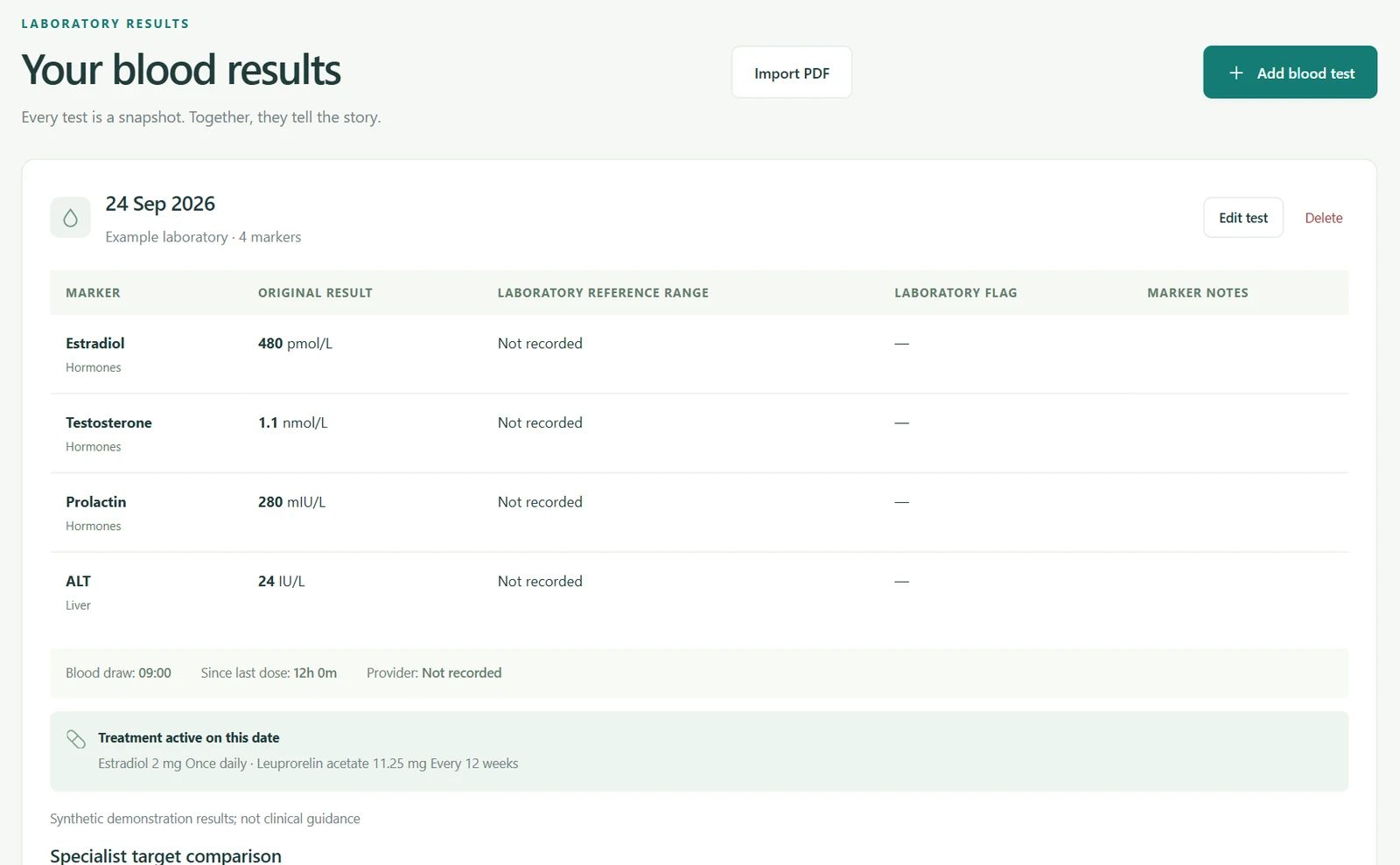
Keep estradiol, testosterone and other blood markers together under the sample date. The original values, units and laboratory details stay with each test.
Upload, review, then save
Upload a supported text laboratory PDF, check the extracted details and save your results. If a report cannot be read, enter the results manually and keep the original document for reference.
Ranges and guidance have different roles
See your specialist’s applicable monitoring guidance beside the original laboratory range and flag. If timing or units do not match, the comparison explains what is missing.
Review changes alongside treatment
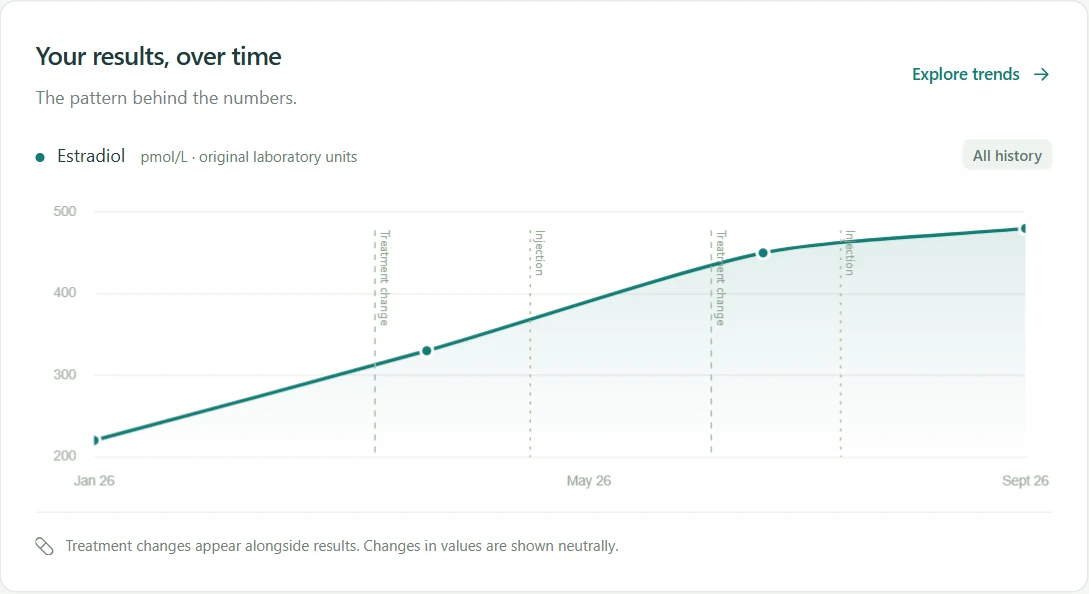
Follow your results over time and check the treatment recorded around each sample. Add dose timing where known, then bring the whole picture to an appointment.
Ask Hormone Ledger
Ask Hormone Ledger to compare recent tests or find a saved result. Try “What changed between my last two blood tests?” and check the source links in its answer.
Learn about Ask Hormone Ledger →Questions about blood test tracking
What blood results can I record?
Hormones, liver markers, blood count markers and other supported laboratory results can be grouped under one sample.
Are laboratory ranges preserved?
Yes. Original values, units, ranges and flags remain with the record; specialist guidance is separate.
Can I record dose timing?
Yes. Enter relevant dose and draw timestamps or a recorded interval where precise times are unavailable.
Keep your treatment information together
A personal record, not a diagnosis or treatment recommendation.